
Gah, of course! Not sure how I forgot about that one. So many villains to keep track of.
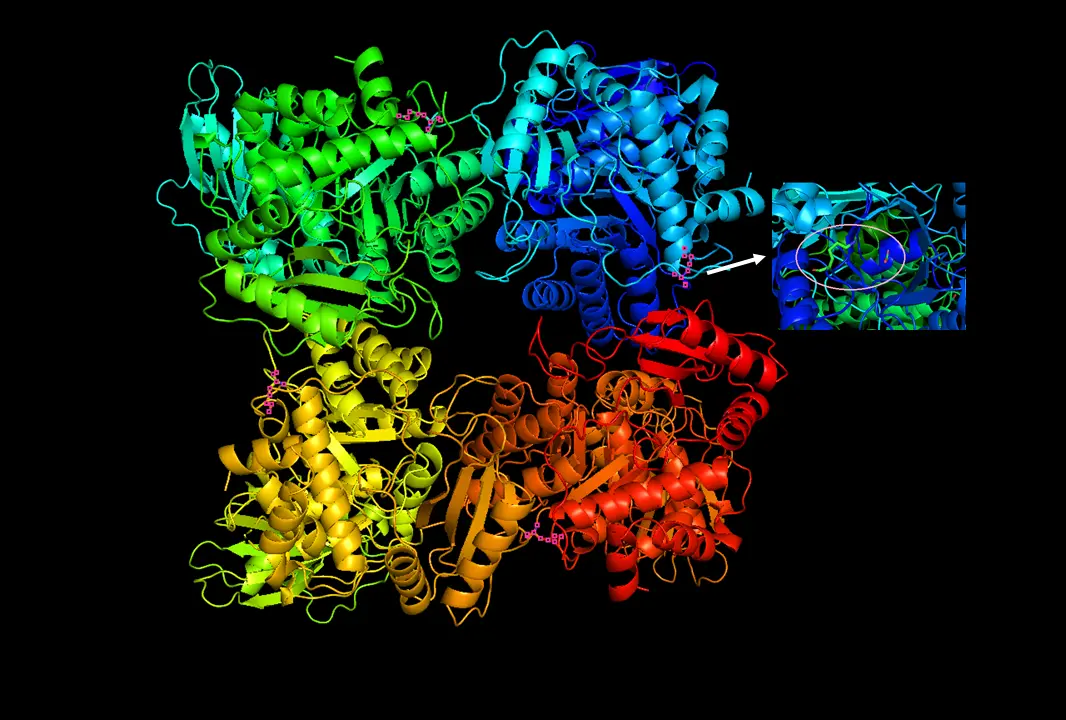
A very old enzyme. Still fixing inorganic carbon in the biosphere through yet another mass extinction. Still grabbing the wrong molecule on occasion. Anyway, here are some more phosphoglycerates.
Kill your lawn, grow a garden. As you do this, look within and do the same.


Gah, of course! Not sure how I forgot about that one. So many villains to keep track of.


Who’s the Gran Añejo for? It’s the only tie I can’t read.
What’s with the dodgeball references? I’m out of the loop apparently.


Agreed.
Also, I think it’s exacerbates, not exasperates.


Ahhh, that makes sense. It sounds like a very interesting line of work.
Yeah, very curious how this happened.


I see. Thank you!
Do you work with any energetics?


Apparently not the first time.
Sucks that Ukraine might see fewer shells from this.
https://www.aesys.biz/products
Our portfolio includes a comprehensive range of energetics based on HMX, HNS, PETN, RDX, and TNT.
Energetics. Yeah that’s one way of putting it.
Not quite Oppau, but close.


It doesn’t take in to account at all those who abstained.
Abstained? You mean helped Reagan win? How’d that strategy work out?
And it doesn’t list by generation just by 10-year increments.
False. Behold, arithmetic!
1980 election
Age (DOB) Range
18-21 (1962-1959) =3
22-29 (1958-1951) =7
30-44 (1950-1936) =14
45-59 (1935-1921) =14
60+ (1920-past)
1984 election
Age (DOB) Range
18-24 (1966-1960) =6
25-29 (1959-1955) =4
30-49 (1954-1935) =19
50-64 (1934-1920) =14
65+ (1919-past)
What they lack is a neat cutoff at 1945.
And generations don’t fall into neat 10-year increments.
No one is doing that.
Wikipedia:
The generation is often defined as people born from 1946 to 1964 during the mid-20th-century baby boom that followed the end of World War II.
More arithmetic! 1964-1946=18
At that point in time boomers were anywhere from 20 to 35.
1945-1960. Sure. Seems a breath away from a neat ten year increment, but sure.


I disagree.
https://en.wikipedia.org/wiki/Baby_boomers

In 1980, it was kinda close, 45v44 (18-21yo) and 44v44 (22-29yo), but I wouldn’t say they were “overwhelmingly against”. By 1984 they seemed quite in favor of him. They had help, no doubt, but they were not largely against; marginally against at most.
https://en.wikipedia.org/wiki/1980_United_States_presidential_election
https://en.wikipedia.org/wiki/1984_United_States_presidential_election
https://en.wikipedia.org/wiki/Minsky_moment
According to the hypothesis, the rapid instability occurs because long periods of steady prosperity and investment gains encourage a diminished perception of overall market risk, which promotes the leveraged risk of investing borrowed money instead of cash. The debt-leveraged financing of speculative investments exposes investors to a potential cash flow crisis, which may begin with a short period of modestly declining asset prices. In the event of a decline, the cash generated by assets is no longer sufficient to pay off the debt used to acquire the assets. Losses on such speculative assets prompt lenders to call in their loans. This rapidly amplifies a small decline into a collapse of asset values, related to the degree of leverage in the market. Leveraged investors are also forced to sell less-speculative positions to cover their loans. In severe situations, no buyers bid at prices recently quoted, fearing further declines. This starts a major sell-off, leading to a sudden and precipitous collapse in market-clearing asset prices, a sharp drop in market liquidity, and a severe demand for cash.
The more general concept of a “Minsky cycle” consists of a repetitive chain of Minsky moments: a period of stability encourages risk taking, which leads to a period of instability when risks are realized as losses, which quickly exhausts participants into risk-averse trading (de-leveraging), restoring stability and setting up the next cycle. In this more general view, the Minsky cycle may apply to a wide range of human activities, beyond investment economics.
The term was coined by Paul McCulley of PIMCO in 1998, to describe the 1998 Russian financial crisis,[2] and was named after economist Hyman Minsky, who noted that bankers, traders, and other financiers periodically played the role of arsonists, setting the entire economy ablaze.[4] Minsky opposed the deregulation that characterized the 1980s.
Some, such as McCulley, have dated the start of the 2008 financial crisis to a Minsky moment, and called the following crisis a “reverse Minsky journey”; McCulley dates the moment to August 2007,[5] while others date the start to some months earlier or later, such as the June 2007 failure of two Bear Stearns funds.


They say naphtha is
an essential feedstock for the petrochemicals used in Taiwanʼs semiconductor and electronic component manufacturing
but where in the manufacturing process is it used?
A DDG search turned up a naphtha cracking plant in Taiwan that was converted in the construction of a new plant, and a bunch of hits for renewable naphtha methods, but no mention of how it’s used or why it’s needed.
It’s worth it. I believe in you.

How far did you get, friend?
Which episode is this?